Authentic German Pork Schnitzel
Introduction
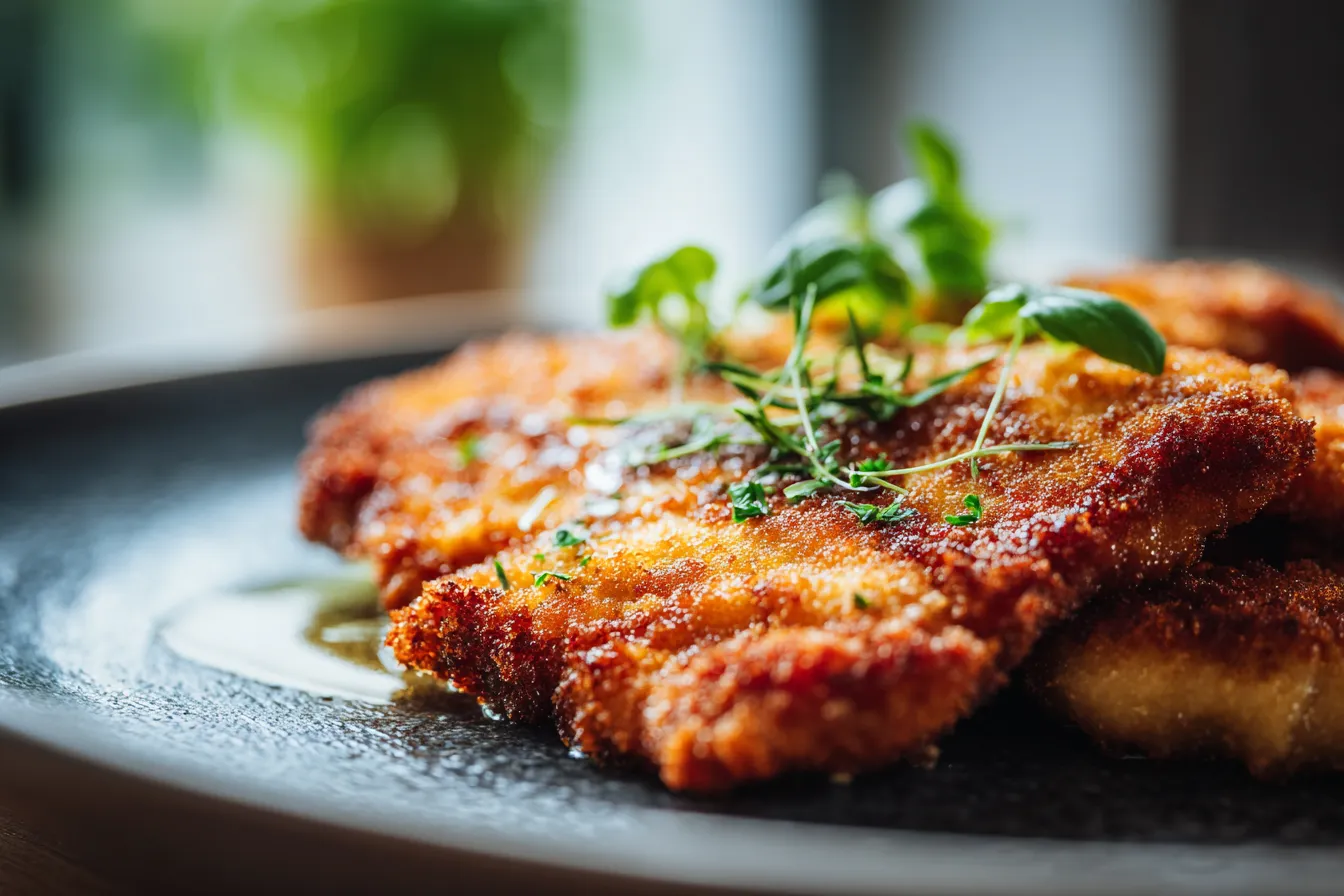
Have you ever wondered why traditional German pork schnitzel is considered a beloved classic not just in Germany, but around the world? With its crispy golden coating and tender meat, this dish has secured its place in the culinary hearts of many. In this post, we’ll dive deep into the authentic German pork schnitzel recipe, from ingredients to serving suggestions, along with valuable tips for achieving the perfect schnitzel that will impress your family and friends.
Ingredients List
| Ingredient | Quantity | Substitution |
|---|---|---|
| Pork loin or tenderloin | 4 pieces (about 6 oz each) | Chicken breast or turkey cutlets |
| All-purpose flour | 1 cup | Gluten-free flour |
| Eggs | 2 large | Flaxseed meal (mixed with water for a vegan option) |
| Breadcrumbs (preferably panko) | 1 cup | Crushed cornflakes for a gluten-free version |
| Salt | To taste | Pepper as an additional seasoning |
| Pepper | To taste | Smoked paprika for extra flavor |
| Vegetable oil (for frying) | Enough to cover the bottom of the pan | Butter or ghee for a richer flavor |
| Lemon wedges | For serving | Vinegar as an acidic substitute |
Timing
Preparing this authentic German pork schnitzel takes approximately 30 minutes, while the cooking itself will take about 15 minutes, bringing the total time to around 45 minutes. This cooking time is considerably shorter than many traditional dishes, which can take over an hour to prepare.
Preparation Time
15 minutes
Cooking Time
30 minutes
Total Time
45 minutes
Step-by-Step Instructions
Step 1: Preparing the Pork
Start by laying your pork loin or tenderloin pieces between two sheets of plastic wrap. Use a meat mallet to gently pound them to about 1/4 inch thick. This not only tenderizes the meat but also ensures even cooking.
Step 2: Setting Up the Breading Station
Set up three shallow dishes: one with flour seasoned with salt and pepper, another with beaten eggs, and the last with breadcrumbs. This assembly line will streamline the breading process, making it easy to coat each piece of meat thoroughly.
Step 3: Bread the Pork
Take each piece of flattened pork and first coat it in the flour, shaking off any excess. Next, dip it into the beaten eggs, allowing any extra egg to drip off. Finally, coat the pork in breadcrumbs, pressing firmly to ensure the coating sticks well. Repeat for all pieces.
Step 4: Frying the Schnitzel
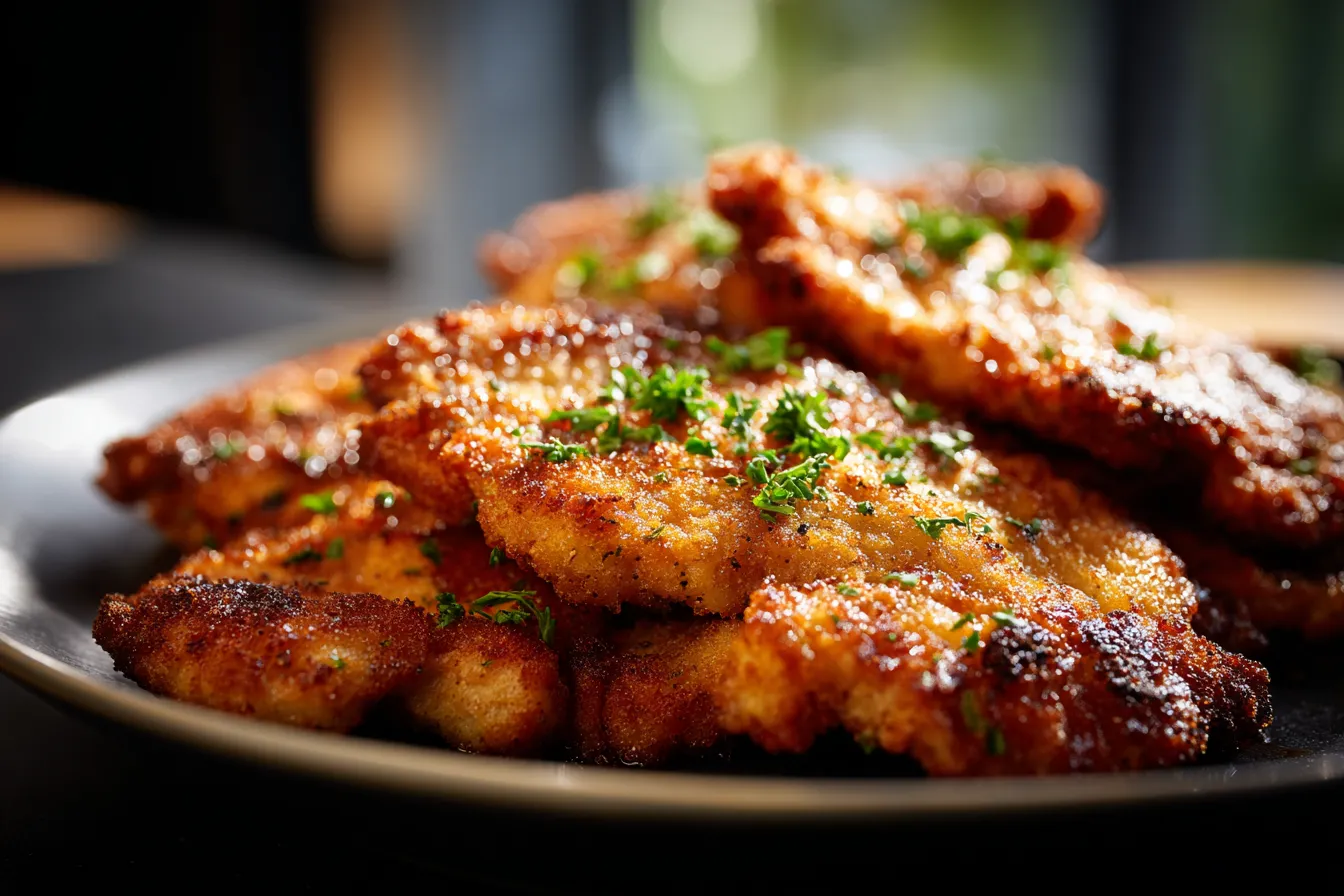
In a large skillet, heat enough vegetable oil over medium heat to cover the bottom of the pan. Once the oil is hot (test by dropping a breadcrumb in; it should sizzle), place the breaded schnitzels in the pan. Fry for 3-4 minutes on each side or until they are golden brown and crispy.
Step 5: Draining and Serving
Once cooked, transfer the schnitzels to a plate lined with paper towels to absorb excess oil. Serve immediately with lemon wedges for a bright, zesty contrast.
Nutritional Value / Health Benefits
| Nutrient | Per Serving (1 schnitzel) |
|---|---|
| Calories | 360 |
| Protein | 28 grams |
| Fat | 20 grams |
| Carbohydrates | 25 grams |
| Sodium | 450 mg |
This schnitzel is a great source of protein, essential for muscle repair and growth, while also providing healthy fats from the oil used in cooking. When served with a side salad or vegetables, it makes a balanced meal packed with nutrients.
Healthier Alternatives for the Recipe
For those looking to make the schnitzel a bit healthier, consider using whole-wheat breadcrumbs instead of all-purpose breadcrumbs. You can also bake the schnitzel in the oven rather than frying it, which reduces the fat content significantly while still achieving a crispy crust.
Additionally, swap the pork for lean chicken or turkey, which is lower in fat but still provides ample protein. For a vegetarian option, you can use thick slices of eggplant or zucchini breaded and cooked similarly, providing a delicious alternative that retains the essence of schnitzel.
Serving Suggestions
German pork schnitzel pairs wonderfully with a variety of sides. Traditional accompaniments include potato salad, coleslaw, or even a simple green salad topped with a tangy vinaigrette. If you’re feeling adventurous, consider adding some sautéed mushrooms or a creamy mushroom sauce on top for an elevated dining experience.
For drinks, a crisp German lager or a glass of Riesling complements the flavors beautifully. To add freshness, serve with a slice of lemon or a sprinkle of fresh herbs like parsley to liven up the dish.
Common Mistakes to Avoid
One common pitfall in making schnitzel is overcrowding the pan while frying, which can lower the oil temperature and result in soggy meat. Always fry in batches if necessary. Also, remember not to skip the step of patting the pork dry before breading. This ensures that the coating adheres better and creates that desired crunch.
Another tip is to avoid using low-quality oil. The oil’s flavor will be imparted to the schnitzel, so choose a neutral-flavored oil that can withstand high temperatures without burning.
Storing Tips for the Recipe
If you have leftover schnitzels, store them in an airtight container in the refrigerator for up to three days. To maintain their crispy texture, consider reheating them in an oven instead of the microwave. Preheat the oven to 350°F (175°C) and bake for about 10-15 minutes until warmed through.
You can also freeze uncooked schnitzels (before frying) by wrapping them in plastic wrap and placing them in a freezer-safe bag. They will keep well for up to three months. When you’re ready to cook, no need to thaw; simply fry them a little longer until cooked through.
Conclusion
Authentic German pork schnitzel is a timeless dish that brings joy to any table with its crispy exterior and tender meat. Remember, the key is in the preparation and quality of ingredients. Give this recipe a try, and don’t forget to leave a comment with your thoughts or share your own schnitzel cooking experiences. Subscribe for more delicious updates!
FAQs
A: Can I make schnitzel in advance?
Yes, you can prepare the schnitzel up to the frying step, then cover and refrigerate it for a few hours before cooking. It’s also possible to freeze it uncooked and fry it later.
B: How do I know when the oil is hot enough for frying?
To test the oil’s temperature, drop a breadcrumb into the oil. If it sizzles upon contact, it is hot enough for frying. You can also use a cooking thermometer to ensure the oil is around 350°F (175°C).
C: Is it necessary to pound the meat?
Pounding the meat is crucial for achieving a tender schnitzel that cooks evenly. It also helps the meat absorb flavors from the breading.
D: Can I use different types of meat for schnitzel?
Absolutely! While traditional schnitzel is made with pork, you can use chicken, turkey, or even veal. Some vegetarian options include eggplant or portobello mushrooms.
E: What is the best way to keep schnitzel crispy?
To keep schnitzel crispy, serve it immediately after frying. If you have leftovers, reheating in an oven instead of a microwave will help maintain the crunchiness.
Print
Authentic German Pork Schnitzel
- Total Time: 45 minutes
- Yield: 4 servings 1x
Description
Discover the secret to making mouthwatering German Pork Schnitzel. This guide reveals tips for an irresistible dish that’s sure to impress! 155 chars
Ingredients
Instructions
Notes
Learn how to make authentic German pork schnitzel with a crispy coating and tender meat, paired with delicious serving suggestions and tips.
- Prep Time: 15 minutes
- Cook Time: 30 minutes
- Category: Main Course
- Cuisine: German
Nutrition
- Serving Size: 4 servings
- Calories: 360
- Sugar: 0 grams
- Fat: 20 grams
- Carbohydrates: 25 grams
- Fiber: 0 grams
- Protein: 28 grams